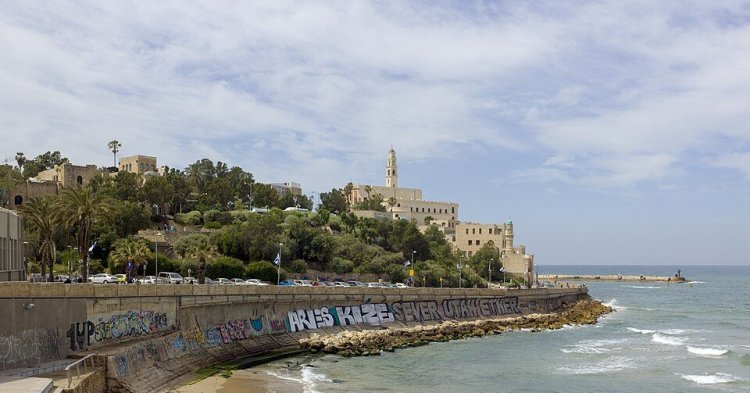
When people talk about Israel and Palestine, the conversation usually focuses on war, politics, occupation, terrorism, governments, fear, and anger. The media is filled with headlines, arguments, and clashing narratives. But within all this noise, very little is said about what is not always visible to the eye: mixed families. Families that live between two worlds, like mine.
On one side, there are Jewish roots shaped by Europe, the Holocaust, Yiddish culture, traditional foods like matzo balls, Zionism, and a deep connection to the Land of Israel.
On the other side, there are Palestinian citizens of Israel carrying the memory of the Nakba, Palestinian identity, cultural traditions like maqluba, and the ongoing complexity of belonging, discrimination, and historical pain.
And yet, within all this complexity, there is also a home. A home that holds love, shared lives, and quiet moments that continue to exist despite the tension outside. A small light that still carries hope.
“Objection!”
Both Israeli and Palestinian society often struggle to accept mixed couples and families. In many ways, this reaction comes from generations of trauma, fear, and political conflict. The media, political systems, and public discourse often reinforce division and suspicion.
A Jewish woman in a relationship with an Arab man may be called a traitor or worse and judged harshly by society. A Palestinian or Arab woman with a Jewish man may face accusations that she abandoned her identity or community.
These judgments do not affect only the couples themselves. They also shape the lives of children before they are even born, forcing them to deal with questions of identity, belonging, and legitimacy from a very young age.
So is it Knafeh or Challah?
If you ask me, I choose both.
Because in a mixed home, there is room for both knafeh and challah. For both Arabic and Hebrew. For both Ramadan and Hanukkah candles. There are homes where Purim songs play loudly while families also wake before sunrise during Ramadan to share dates and tea before the fast begins. Homes where children grow up listening to Israeli childhood songs alongside traditional Palestinian dabke music. Homes where identity is not defined by choosing only one side, but by the ability to hold both. And maybe in these homes where people learn to embrace two cultures, two languages, and two historical narratives a deeper form of humanity is created.
Between Shelter and Routine
During times of war, everything becomes more complicated. Even a simple trip to the supermarket can feel emotionally heavy. Fear enters the home, the conversations, the phone calls, and everyday life.
Within this reality, mixed families are often required to do something many societies struggle to achieve: to hold complexity without losing their humanity.
I will not lie, even I, coming from a mixed family, was afraid to ride the light rail in Jaffa during tense times. “Light” was not exactly how it felt. There were fears, suspicions, and suddenly, during an active war, members of the extended family began falling back into old fears and divisions. The wound reopened once again. In moments like these, I would sit with myself and try to contain the unbearable reality, telling myself: It does not mean agreeing on everything. It does not mean erasing pain or giving up identity. It means understanding that love can exist even where there is no full agreement. It means accepting disagreement while still recognizing the humanity of the other. It is possible to acknowledge Palestinian suffering while also understanding the fear and trauma carried by Israeli society.
Beyond politics, there are human beings on both sides living with pain, fear, memories and hope.
Beyond Politics
Mixed families may not solve the conflict. But their very existence carries an important message: even within a reality filled with separation, fear, and hostility, people still choose partnership, love, and shared lives.
And maybe, in homes where both knafeh and challah are placed on the same table, there is also the possibility of imagining a different future.
At the end of the day, we come from dust and to dust we shall return. These conflicts existed before us and will probably continue after us.
But before all the divisions, before politics, borders, and ideologies, we are human beings. We are made of emotions, disappointments, love, and hope.
We are the excitement of a child’s first step and the quiet comfort of the first rain of winter. We carry memories, fears, dreams, and the simple desire to belong and to be loved .Before the conflict, we are human. Maybe remembering this simple truth is the safest place of all. We are dynamic beings. Without change and movement, there is no ability to survive.
Maybe this time, I hope there will be a small change in a closed room: inside the heart.

Follow the comments: |
