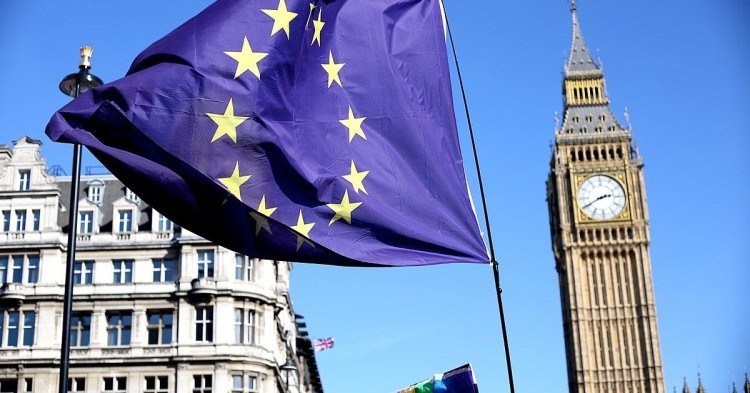
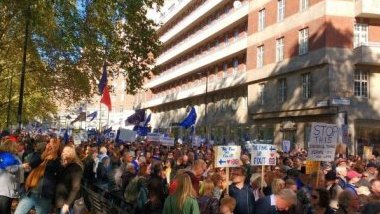
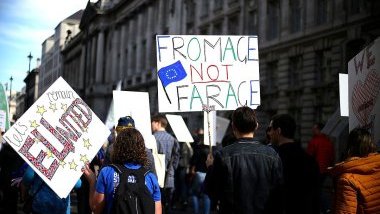
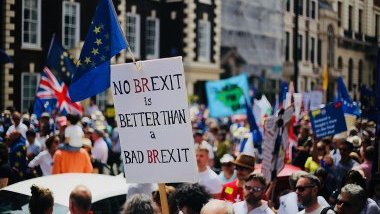
On 20 October, more than 700,000 people took to the streets of London for an anti-Brexit march, calling for a second referendum on whether the UK should quit the European Union[1]. They raise the demand of giving the electorate the final say on the “exit deal” from the EU, which could also be a no-deal scenario in the event that the negotiations break down.
Coupled with this protest is the “Final Say” petition by the newspaper The Independent, calling for another referendum, which has already reached over 900,000 signatures[2]. It is very good for British democracy to see people being mobilised on a political issue and raising their voice. However, I do not believe that the call for a second referendum on Brexit is the right way to proceed, as it is inherently undemocratic.
The Brexit referendum on 23rd June 2016 led to a small majority of 51.9% of British voters deciding in favour of a UK exit from the European Union. This rather unexpected result was the final outcome of David Cameron’s general election campaign of 2015, where he promised to hold a vote on EU membership if re-elected as Prime Minister. The promise was Cameron’s strategy to silence the long-lasting Euroscepticism that had been present in the Conservative Party since the 1990s. Cameron’s political move then led to the unexpected win of the Brexiteers and to Cameron’s resignation shortly thereafter. The referendum polarised the country around the European question, dividing the country over diametrically opposing visions on what is the best future for the UK.
This situation was created by a referendum that was undemocratic in the first place. From a theoretical standpoint, I think the circumstances fit the theory of Jan-Werner Mueller’s book on “What is Populism?”[3]. According to his thoughts; referenda are a tool for politicians to give the population a vote on an issue they have already decided on and just want to give it a veneer of democratic approval by making it a decision by the people. In the case of Brexit, David Cameron saw the vote as an opportunity to silence the Eurosceptic wing of the Tories and to stop the growing support for the UK Independence Party. The only part that he didn’t expect was that he would lose. Secondly, referenda are not a democratic decision-making process, because as in this case, most people were not fully aware of the consequences of “the Leave vote” and were consequently misled by emotional arguments and fiction.
Therefore, such a complex and highly debated issue as quitting the EU, with its four freedoms of the Single Market, is a decision that ought to be taken via the ordinary decision-making process of the elected representatives. They have been elected by the people and as such should be the only legitimate way – along with the House of Lords and with the approval of the courts – to determine the future path of the UK.
Calling for a second referendum is a seemingly straightforward and democratic option to decide whether the negotiated Brexit agreement or the no-deal scenario is what the British would like or not.
However, such a campaign is rooted in the same illegitimate and undemocratic notion as the first referendum, which would not justify a new vote but only discredit its result. Holding a new vote would lead to a vicious cycle where each side would try to let people vote until they receive their preferred outcome. Moreover, what is there to be gained from a second referendum that reverses Brexit? In that case, Remainers would be happy, but the other half of the electorate would feel betrayed, leading to further polarisation and a failure to address the fundamental political division at hand.
In light of this difficult situation, I think the outcome of the first referendum cannot be contested in the same way but has to be challenged by democratic means. Consequently, instead of calling for a new vote, an alternative would be to hold a general election to elect a new House of Commons which will then be empowered by the people to decide whether or not to leave the EU based on the exit scenarios.
Such a vote must be held before 29th March 2019, when the UK is officially scheduled to leave the European Union. This option, however, is rather unrealistic as the unresolved “Irish border question” continues to prevent the conclusion of the exit deal between the UK and the EU. Without an end of the negotiations in close sight, it is unlikely that there will be enough time left to organise an election.
Hence, there are two primary actions UK citizens should engage in if they are not willing to accept the scheduled exit of the EU. Firstly, it is essential to make oneself heard like it was done on Saturday. Secondly, as the House of Commons votes on the final deal, I believe that convincing one’s Member of Parliament that Brexit should be halted is currently the only democratically legitimate and realistic option, time-wise, that British people have to reverse the decision to exit the European Union.


1. On 29 October 2018 at 19:33, by Ian Beckett Replying to: Holding a second Brexit referendum would be inherently undemocratic
You call for a general election as the only true democratic means of resolving the Brexit polarisation. You may be aware we had a general election in 2017, twelve months after the Referendum. Both the Conservatives and Labour stood on pro Brexit platforms including exiting the single market and the customs union. Between them they obtained 26.5m votes (82%) and both parties saw their share of the vote increase over 2015. These are the representatives who are in post now and they stood very clearly on the position that the referendum exit result would be honoured.
The Remainers had the option of supporting the Liberal Democrats who were equally clear in their wish to remain in the single market and the customs union and fight Brexit every step of the way including a promising a second referendum. How was that received? In 2010 the Lib Dems got 6.8m votes, in 2015 that fell to 2.4m and in the 2017 one where they were the torch holders for Remainers? Down even further to 2.3m.
We have had the election you call for with Brexit as a central question and the results are above. But you still call for yet another election. At what point does the pro EU side accept that the result was clear and a clear majority of Britons want to leave the EU and have now voted that way twice.
As a final point, as you correctly point out, Brexit won with 51.9% of the vote. In the French Maastricht Referendum 1992 the pro EU side obtained only 51% of the vote, I do not recall any acceptance that there should be a second vote or general election in that case.
2. On 2 November 2018 at 17:34, by Lukas Martini Replying to: Holding a second Brexit referendum would be inherently undemocratic
Thank you for your comment. As you pointed out correctly there was a general election in 2017 that was centred on confirming the Brexit decision, which was indicated in the unbinding referendum of 2016. At that time the negotiations with the EU just started and both sides were optimistic in reaching a deal that would keep the UK closely connected to the EU. Today, however the situation is different, as a no deal scenario is very likely. This raises the issue that a part of the British population was not expecting such an outcome or now changed its mind about leaving the EU. Even if the share of people that support Brexit stayed the same, then I still believe a vote is democratically legitimate. A democracy is based on competition of ideas and deciding, which ideas to implement and which ones not. If the situation changes then the population should have the possibility to change its mind by voting against a formerly adopted law. This means that no decision is ever irreversible.
3. On 7 November 2018 at 22:45, by ToTheStone Replying to: Holding a second Brexit referendum would be inherently undemocratic
There can be many critisms made to referendums, but that they are not democratic is not one of them. Your arguement appears to me to be that they are not democratic because the people cannot be trusted to vote the right way. If democracy is power to the people you are argueing that the people cannot be trusted with this power. You should take some guts and make an arguement as to why the people cannot be trusted to make the decision themselves. The idea that the overthrowing of a democratic vote by the indirect decision of the parliament will not be seen my the majority as an overthrowing of the will of the people is unrealistic. You already admit that its directly democratic overthrowing through a second referendum would be polarising. Imagine if it was a decision by parliament which made the decision? How would a general election on brexit happen? Even if labour or the conservatives somehow become pro-remain the election will be primaraly on other issues, as it was in 2017.
Follow the comments: |
|
