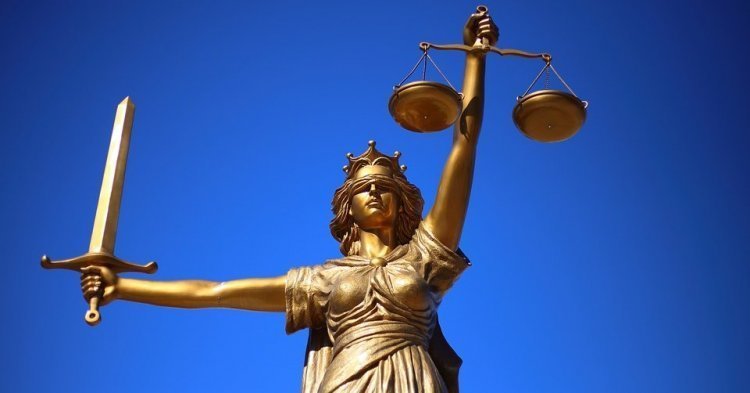
Russia, China, Iran – it is no secret that these countries are anything but democratic, and they do not even pretend to be. However, before finger-pointing at the others, Europeans have to admit to themselves that democracy on our continent was in a better state some years ago. The rise of populist parties which question fundamental human rights and established democratic structures and, once in power, don’t always hesitate to significantly weaken the latter, has become a major concern for Europe.
The perception that democracy is getting increasingly under pressure in Europe is not only a subjective one, but also reflected by the US think tank Freedom House, which yearly publishes its report on Freedom in the World. This report gives a detailed assessment of the situation of democracy in all countries worldwide; in this context, democracy is understood as the interplay of political rights and civil liberties.
A country is considered “free” if these criteria fulfill the requirements for democracy, for instance the guarantee of the freedom of expression, fair electoral processes and low levels of corruption. In its regional overview for Europe in 2019, the report warns of autocratic leaders who undermine critical institutions: “Antidemocratic leaders in Central Europe and the Balkans—including some who have brazenly consolidated power beyond constitutional limits—continued undermining institutions that protect freedoms of expression and association and the rule of law.”
What is democracy?
Indeed, the question of how to define democracy has been puzzling philosophers, statesmen and stateswomen as well as scholars of all disciplines for years. When the term emerged in Socrates’ state theory, it still had a negative connotation, implying a chaotic rule of the many without any common principles or rules, ending up in tyranny. From a purely semantic point of view, democracy means the reign of the people, which can in modern terms be understood as a form of a state in which decisions are legitimised by the people.
These days, democracy is mostly defined with the help of three categories, namely its structures, its procedures and its contents. The structural level concerns the constitutional provisions that set up democracy: In general terms, a regime is considered democratic if its constitution ensures the separation of powers, rule of law and fundamental human rights.
From a procedural perspective, regimes are understood as democratic if they provide for the effective participation of the citizens in the process of political decision-making, be it by representation by elected politicians or by forms of direct participation such as referenda. The most important form of this participation are elections, which do not only take place regularly, but also ensure a fair, equal and secret electoral process.
When it comes to concrete policies, it is more complicated to set up categories for democratic or non-democratic policies. What is important in this context is that democratic policies seek to implement the constitution and the democratic principles laid down in it. For instance, policies in a democratic regime can consist in laws improving the protection of minorities or fighting gender inequality. However, structures, procedures and policies are intermingled and can barely be separated from each other, as these levels affect each other directly.
Is there such thing as an “illiberal democracy”?
Yes and no. In political science, the term of “illiberal democracy” is used in the field of research on regimes and political transformation. In this context, an “illiberal democracy” figures among the different types of so-called defective democracies, which describes democratic regimes with major flaws on democratic standards, for instance the inclusion of minorities, electoral processes or the separation of powers. In illiberal democracies, these flaws concern the rule of law and the civil rights and often come to light when elected officials do not comply with constitutional norms anymore. In this context, there is an “illiberal democracy”.
Viktor Orbán has recently started to justify his contested reforms of the freedom of the press and the judiciary by calling Hungary an “illiberal democracy”. According to him, this implies a sub-form of a democracy with a strong leader, just as democratic as liberal democracies which respect the structural principles of democracy and ensure all civil rights. While the term of an “illiberal democracy” might fit well in political science research in order to classify regimes, there is no such thing as an illiberal democracy in practice. Either a state complies with the democratic principles like rule of law and civil rights and liberties, or it is illiberal and it does not — but in this case, it is not democratic anymore.
Why is democracy important?
While democracy has been considered the guarantee of growth and prosperity for many years, notably because democratic structures are often connected to market economies, this argument has lost its scope with the rise of China and other countries performing extremely well on economics, but poorly on democratic standards. However, democracies are the only states that, by nature, protect the fundamental human rights the international community has agreed on with the Universal Declaration of Human Rights in 1948.
Autocratic regimes are characterised by bundling political power in the hands of an individual or a group, and the lack of control of the exercise of this power. This makes it difficult to guarantee a set of basic rights, such as the right to an effective remedy by the competent national courts (article 8) or an independent and impartial tribunal (article 10). Moreover, securing power in an autocratic regime often relies on methods like censoring media or critics, which contradicts the human right of freedom of expression.
How does democracy get under pressure?
“Those who fall asleep in a democracy might wake up in a dictatorship.” This frequently quoted phrase illustrates quite well how democracy gets under pressure. Normally, constitutional structures, procedures and policies are not changed overnight, but in a slow process. These changes often start with freedoms being undermined, particularly often the freedom of expression; a popular pattern of justification consists in a discourse which highlights the need for more security which cannot be reconciled with the high degree of individual freedoms.
Moreover, the reform of tribunals and legal procedures often follows these measures for the sake of more effective governance and the demonstration of the power of the state, as leaders in these regimes often proclaim. Dependent on the political orientation and ideology of the leader, claims related to public moral or ethics can accompany these procedures. At the point where a free press and civil society organisations do not exist anymore or have become de facto government institutions, stepping back from the new rules is very difficult, unless there is a change in leadership after elections.
This explains why it is important to keep an eye on the democratic development of states – in early stages of the violation of democratic principles, a strong opposition and a well-organised civil society can still counterbalance autocratic ambitions or at least slow down their pace and reduce their scope.


1. On 18 February 2019 at 17:54, by Ian Beckett Replying to: When democracy gets under pressure
Two very quick observations. The title picture is of Justice and has the sub title “Rule of law is a key element of democracy.” Who could argue with that? Unfortunately the EU has a very long tradition of breaking its own laws when it is politically expedient to do so. The way in which the various TFEU Articles relating to the management of the euro are a case in point. That is of course before one considers the biased enforcement of laws dependent on the country being considered. To quote President Juncker when yet again EU laws on budgetary compliance were suspended for France “because it is France”. Italy wasn’t accorded the same treatment.
The second observation would be that the Economist Intelligence Unit 2018 report on the state of democracy across the World notes that of the 28 states in the EU only 11 are full democracies. The remainder, including large states such as France, Italy, Poland and Belgium are classified as flawed democracies because while they have free and fair elections and observe human rights, they have serious problems in regards to media freedoms, political culture, participation levels and functioning of government. For those interested the UK and Germany are the only two large states that qualify as full democracies, while the flawed democracy in Romania is considered worse than those in Indonesia, Mongolia and Tunisia. Food for thought when there is talk of ‘European democratic values’, and indeed in many ways supporting the main thrust of the entire article.
2. On 18 February 2019 at 18:20, by Gesine Weber Replying to: When democracy gets under pressure
Thank you very much for these comments and especially for the hint to the Economist Intelligence Unit 2018. Indeed, the state of democracy in Europe - notably in the established democracies - is subject of worries, and it would be very enlightening to have an additional article on this. I do not want to go into detail here because elaborating on democracies as political science does would surely exceed the scope of this article. However, as your comments are very valuable and you seem very well informed, I would suggest you to contact the editors-in-chief of the English language version: https://www.thenewfederalist.eu/write-for-us. Maybe you want to lay down your “food for thought” in an article? However, the article was not meant to reflect a perspective worshipping “our European democratic values” - in contrasts, in thrust and scope consist in presenting a comprehensive perspective how democracy is generally defined and understood.
Follow the comments: |
|
